
In-office dry eye treatment clears blocked glands and reduces periocular inflammation. What determines whether those results hold is what happens at home every day afterward. Bacterial overgrowth and demodex on the lid margin are the most common reasons dry eye and blepharitis return within weeks of in-office care. Dr. Malani prescribes specific OcuSoft products matched to each patient's lid margin findings at Lotus Eyecare in Frisco, so the home care piece is as deliberate as the clinical treatment.
OcuSoft Lid Hygiene in Frisco, Texas
Why the lid margin is where dry eye begins
The lid margin is the anatomical border between the skin and the mucous membrane of the eye. The meibomian gland openings, the lash follicles, and the tear film drainage system all converge there. When bacteria colonize that margin in excess, they produce enzymes that degrade the tear film lipid layer and keep the gland openings inflamed. When demodex mites nest in the lash follicles, they trigger chronic anterior blepharitis that no amount of in-office treatment can overcome without consistent home hygiene to control the population.
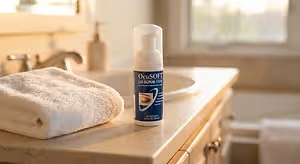
Drops and in-office procedures treat the eye. OcuSoft lid hygiene treats the lid margin, which is the source of the problem for most patients with evaporative dry eye and blepharitis. At Lotus Eyecare, Dr. Malani uses slit lamp examination of the lid margins to determine which product is appropriate before prescribing:
- OcuSoft Lid Scrub Original Foam: for daily hygiene in patients with general bacterial overgrowth or mild MGD
- OcuSoft Lid Scrub Pre-Soaked Pads: for sensitive skin or patients who prefer a no-rinse, travel-ready format
- OcuSoft Hypochlorous Spray: for patients with confirmed or suspected demodex blepharitis, or stubborn lid-margin inflammation that foam alone has not controlled
Prescribing the wrong product wastes time and does not help the underlying condition. The exam finding drives the product choice, not convenience or brand preference.

Build a complete dry eye plan at Lotus Eyecare
A dry eye evaluation at Lotus Eyecare includes slit lamp assessment of the lid margins, meibomian gland imaging, and a review of what you have already tried. You leave with a specific product recommendation for home use and, when appropriate, an in-office treatment plan that supports it.
Common questions about OcuSoft lid care
The foam is appropriate for most patients as a daily cleanser for mild to moderate bacterial overgrowth and general MGD maintenance. Pre-soaked pads are better for sensitive skin or patients who travel frequently and need a no-rinse option. Hypochlorous spray is specifically indicated for demodex and persistent lid-margin inflammation that has not responded to foam alone. Dr. Malani selects the product based on slit lamp findings, so the recommendation reflects what your lid margins actually need rather than a generic protocol.
Usually yes. Daily lid hygiene controls the bacteria and debris that accumulate on the lid margin. It does not clear glands that are already physically blocked. Envision IPL reduces the periocular inflammation that degrades gland function. iLux expresses the obstruction from inside the gland. The three approaches address three different parts of the same problem. Skipping the in-office component tends to stall the overall result even when home hygiene is done correctly.
Yes. Clean the lids before inserting lenses, not after. Removing the bacterial load and lid debris before the lens goes in reduces the inflammatory stimulus at the lid margin that degrades comfort during wear. Patients with significant lid disease sometimes benefit from a switch to specialty contact lenses while the underlying condition is being treated, and Dr. Malani will discuss that option if the slit lamp findings warrant it.
Most patients notice a reduction in morning grittiness and lid heaviness within two to four weeks of consistent daily use. The full benefit builds over one to three months as the lid margin bacterial load decreases and the gland openings stay clearer between in-office sessions. Inconsistent use slows that process and allows the bacterial population to reestablish, which is why daily use is the minimum recommended frequency rather than a goal.