
Dr. Sophia Malani O.D. evaluates the lens along with your prescription and the health of the whole eye. You leave knowing whether a cataract explains what you are seeing, what else could be contributing, and what the next step looks like.
Cataract Evaluation in Frisco, Texas
How Cataracts Change the Way You See
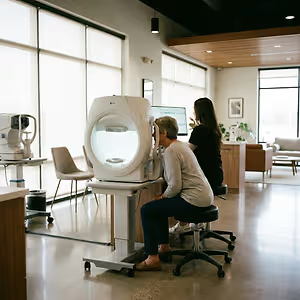
The lens sits just behind the pupil and focuses light onto the retina. As proteins in the lens gather together, the lens becomes cloudy and scatters light instead of passing it through cleanly. That scattering is why contrast fades first, and why bright light often feels worse than dim light.
Lens clouding is a normal part of aging. Almost everyone who lives long enough develops some of it. What varies is how quickly it progresses and how much it interferes with daily life, which is why the same amount of clouding can affect two people very differently.

Signs That Point to a Cloudy Lens
- Blur that builds slowly and is not fully cleared up by a new prescription
- Glare from headlights, streetlights, or low sun
- Halos or streaks around lights after dark
- More trouble driving at night than you used to have
- Colors that look dull, yellowed, or faded
- Reading that needs brighter light than before
- Print and detail that seem to have a haze over them
- Ghosting or a faint double image in one eye
- More squinting, especially outdoors
- Frequent changes to your glasses prescription
- Trouble telling similar shades apart
- Feeling less sure of your footing in dim rooms or on stairs
None of these signs confirms a cataract on its own. Dry eye, a shifting prescription, glaucoma, and retinal problems can all cause similar complaints, which is why the evaluation looks at the entire eye rather than the lens alone.
Who Should Be Evaluated
A cataract evaluation is worth scheduling when your vision no longer matches the way you live. Age is the strongest risk factor and most cataracts are found after 60, but the reason to be checked is function, not a birthday.
- Blur, glare, or faded color that was not there a year ago
- Night driving that has become harder, or that you now avoid
- A new prescription that helps less than it used to
- A family history of early cataracts
- Diabetes, or long-term use of steroid medication
- A past eye injury, eye surgery, or uveitis
- Years of smoking or strong sun exposure without eye protection
- Another eye condition, such as glaucoma or macular degeneration, already being monitored
If you already come in for a comprehensive eye exam, the lens is checked as part of that visit. Tell us at the start of the appointment if glare or night driving is your main concern, so we can spend time on it.
What Happens at a Cataract Evaluation
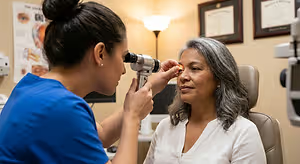
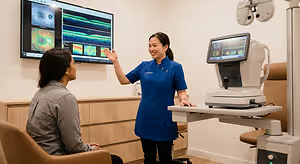
There is no single measurement that defines a cataract. The diagnosis comes from what you describe combined with what the examination shows, so the visit covers three things.

Your Vision and Refraction
We measure how clearly you see, with and without your current glasses, and refine your prescription. Refraction shows whether new glasses can meaningfully sharpen your vision. When the lens is the main cause of the blur, an updated prescription helps less than you would hope.
Dilated Eye Health Evaluation
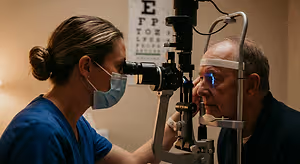
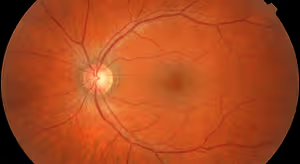
Dilating drops widen the pupil so the doctor can see the lens, the retina, and the optic nerve directly. This part of the exam shows how much the lens is clouded and confirms that nothing else in the eye is causing the change. Plan on blurry vision and light sensitivity for a few hours afterward.
Ruling Out Other Causes
Blur and glare do not always come from the lens. Dry eye, glaucoma, and diabetic changes in the retina can produce similar symptoms, sometimes alongside a cataract. The evaluation checks for each of them, so the plan you leave with addresses the right problem.
Monitoring, Referral, and Cataract Surgery
Finding a cataract is not the same as needing surgery. Most cataracts are monitored for years. If your vision still supports the things you do, the plan is usually to keep measuring change at your regular visits and revisit the decision when it starts to matter more.
The decision rests on function. When reading, driving, work, or a hobby becomes harder than you are willing to live with, we refer you for a surgical consultation and send your findings ahead, so the surgeon starts with a clear picture.
Cataract surgery is performed by an ophthalmologist in an operating room. Our practice is an optometry practice and does not perform cataract surgery. Dr. Sophia Malani O.D. evaluates the cataract, rules out other causes, explains your options, makes the referral when the time comes, and provides the follow-up care the surgeon requests.
There is no rush built into this process. If monitoring is the right answer for now, that is what we recommend.
Before Your Dilated Eye Exam
Most cataract evaluations include dilating drops. They take a few minutes to begin working, and the effect lasts a few hours.
Bring a current list of your medications, including eye drops, inhalers, and anything you take without a prescription. A few medication classes, such as alpha blockers used for prostate symptoms, can affect how the pupil responds, and it helps the doctor know about them before the exam.
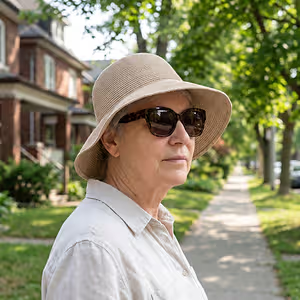
Sunglasses help on the way home, and a hat is useful too. If glare or blurry vision makes you uncomfortable behind the wheel, bring someone who can drive. If arranging a ride is not possible, tell us when you book and we will talk through what to expect.
Reading and paperwork take more effort while your pupils are wide, so plan the rest of the day with that in mind. Many people go straight back to work or errands without trouble. Others prefer an easier afternoon.

When a Sudden Change Needs Urgent Care
A cataract develops over months and years. It does not cause sudden severe pain or a rapid loss of vision, so symptoms like these are not a routine cataract problem and need prompt attention:
- Sudden vision loss, or a dark curtain moving across your vision
- Eye pain with redness, nausea, or vomiting
- New flashes of light, or a sudden shower of floaters
- Sudden double vision, or a shadow in the center of your vision
- A painful, light-sensitive eye after an injury or a chemical splash
Call our eye clinic at (972) 334-9095 during regular hours for advice. For severe pain, sudden vision loss, or a chemical exposure, seek emergency care right away.
Cataract Questions Frisco Patients Ask
No. Most cataracts are watched for years before surgery is considered. The decision is based on how much the cataract interferes with what you do each day, along with how the eye is responding. Your eye doctor and the surgeon who would perform the procedure both take part in that conversation.
Sometimes, especially early on. A refraction at the evaluation shows how much of your blur comes from your prescription and how much comes from the lens. When a cataract is the main cause, an updated prescription gives less improvement than it once did.
Yes. A full cataract evaluation includes dilating drops so the doctor can see the lens and the back of the eye. Your vision stays blurry and light-sensitive for a few hours. Bring sunglasses, and arrange a ride if driving afterward does not feel comfortable.
Most cataracts are reviewed once a year, and more often if your vision is changing quickly or another eye condition needs watching. We tell you when to come back rather than leaving you to guess.
A cataract is a medical condition, so the evaluation is often billed to your medical insurance rather than your vision plan. Coverage depends on your plan. Call us at (972) 334-9095 and we will check your benefits before the visit, or see the plans we accept.
Know Where Your Vision Stands
Book a cataract evaluation at Lotus Eyecare in Frisco and leave with a clear answer about what is changing in your eyes and what comes next.