
Dr. Sophia Malani O.D. evaluates the macula, tracks changes over time, and coordinates with retinal specialists when a form of AMD needs treatment beyond monitoring.
Protecting Central Vision From Macular Degeneration in Frisco
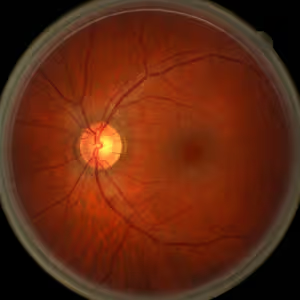
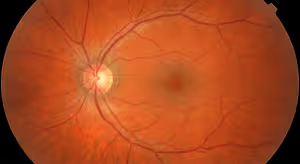
How AMD Affects the Macula
The macula is a small area at the center of the retina, roughly the size of a pencil eraser, packed with the cells that give you detailed central vision. Age-related macular degeneration (AMD) is the breakdown of that area over time. Side vision usually stays intact, so AMD does not cause total blindness, but it can make reading, driving, and seeing faces harder.
There are two forms, and they behave very differently. The dry form develops slowly as deposits called drusen build up under the macula. The wet form develops when abnormal blood vessels grow and leak beneath the retina, and it can change vision in a matter of days. Because the early stages often cause no symptoms at all, regular dilated exams and retinal imaging are the only reliable way to catch AMD before it affects daily life.
Dry and Wet AMD: Two Forms, Two Care Paths
Dry AMD
Dry AMD is the more common form, affecting about eight in 10 people with the condition. Drusen, small yellow deposits, collect beneath the macula and the tissue thins gradually. Vision changes are usually slow, and many people have no symptoms for years. There is no cure, but monitoring, healthy lifestyle habits, and nutritional support may help slow progression for some patients. We track dry AMD with regular imaging and offer MacuHealth nutritional support so we can catch any shift toward the wet form right away.
Wet AMD
Wet AMD is less common but far more urgent. New blood vessels grow under the retina and leak fluid or blood, which distorts and can rapidly damage central vision. Wet AMD is treated by retinal specialists, usually with medication injections into the eye and sometimes with laser therapy, and prompt treatment offers the best chance of preserving vision. Dr. Malani does not perform these treatments in office. When she suspects wet AMD, she refers you to a retinal specialist quickly and coordinates your ongoing care with your other doctors.
Signs That Something Is Changing in Your Central Vision
AMD can be silent in its early stages. These are the changes worth bringing to an eye doctor, sooner rather than later.
- Straight lines, like a doorway or window frame, look wavy or bent
- Words on a page blur or vanish in the middle
- A dark or empty spot appears in your central vision
- Colors look duller or less bright than before
- You need brighter light to read or do close work
- Faces are harder to recognize, even up close
- Driving, especially at night, feels less comfortable
- Reading slows because letters seem to jump or fade
- One eye seems to see worse than the other
- Straight-ahead tasks take more effort than they used to
Who Faces a Higher Risk of AMD
AMD is common with age, but some factors make earlier and more frequent monitoring worth it.
- Age 50 and older, with risk rising sharply after 65
- A parent or sibling with macular degeneration
- Smoking, current or past
- High blood pressure or heart disease
- A diet low in leafy greens and fish
- Obesity or a mostly sedentary lifestyle
- Years of sun exposure without eye protection
- AMD already diagnosed in one eye, which raises the risk in the other
What a Macular Evaluation Includes
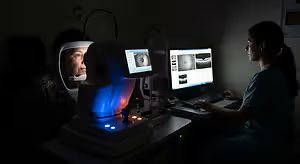
The visit starts with a conversation about your symptoms, health history, and family history, along with any prior eye records you can bring. From there, Dr. Malani examines the macula in detail and takes retinal photographs or optical coherence tomography (OCT) scans to look at the layers beneath the retina.
Amsler grid testing gives you a simple way to check your central vision at home between visits. A yearly dilated exam with imaging builds a record of change over time, which is what makes it possible to spot a shift early.
At the end of the visit, you will know where things stand: no signs of AMD, early dry AMD to monitor, or a change that should go to a retinal specialist. Your monitoring plan is built around your risk, not a fixed schedule for everyone.
Call Right Away for Sudden Distortion or Vision Loss
Dry AMD usually changes slowly, but wet AMD can move in days. If straight lines suddenly look wavy, a dark spot appears in the center of your vision, or your central vision drops quickly in one eye, treat it as urgent. Call (972) 334-9095 and we will work you in. If the office is closed, seek emergency eye care rather than waiting. Treatment for wet AMD works best when it starts right away.

A yearly dilated exam and retinal imaging are the foundation of AMD monitoring and the best place to start if you are not sure what you need.

Another age-related condition that can appear alongside AMD. OCT imaging and visual field testing catch it early, when treatment helps most.
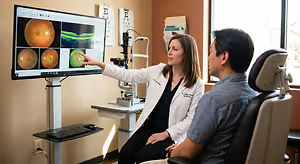
Diabetes raises the risk of retinal changes. Annual dilated exams and imaging help protect both central and peripheral vision.
Protect the Central Vision You Have
Whether you have a family history of AMD, a diagnosis you want watched closely, or a recent change in your vision, an evaluation with Dr. Malani at Lotus Eyecare in Frisco is the first step.
Macular Degeneration Questions Frisco Patients Ask
There is no cure for AMD, and no treatment restores vision that has already been lost. Dry AMD is managed with monitoring and steps that may help slow progression. Wet AMD is treated by retinal specialists, which can preserve vision when it starts early. Our role is early detection, careful monitoring, and fast referral when treatment is needed.
Rarely. AMD affects central vision, not side vision, so complete blindness from AMD alone is uncommon. Many people keep useful peripheral vision and continue to read and get around with the right support. Early detection and regular monitoring give you the best chance of protecting the vision you have.
Dry AMD is the gradual thinning of the macula as drusen build up, and it is the more common form. Wet AMD happens when abnormal blood vessels leak under the retina and can change vision quickly. Dry AMD can turn into wet AMD, which is why we monitor closely and act fast on new symptoms.
It depends on your risk and what we find. Early dry AMD is often monitored with a yearly dilated exam and imaging. Higher-risk patients and anyone with active changes may be seen more often. Dr. Malani sets a schedule that fits your eyes rather than one fixed interval for everyone.
Medically necessary AMD evaluations, imaging, and monitoring bill to your medical insurance, not your vision plan. We verify your benefits before testing so you know what to expect. Routine vision exams follow your vision plan.