
Standard soft contact lenses depend on a smooth, round cornea to work. Patients with keratoconus, post-surgical corneas, or severe dry eye often find that soft lenses cannot provide clear, comfortable vision regardless of how many times the prescription is updated. At Lotus Eyecare in Frisco, Dr. Malani fits scleral lenses for patients whose corneas standard lenses cannot serve.
Scleral Lenses for Irregular Corneas in Frisco, Texas
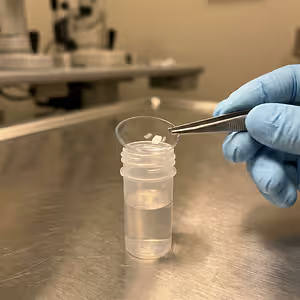
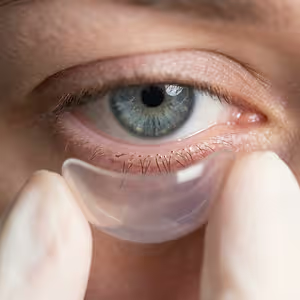
Why scleral lenses work when soft lenses do not
A scleral lens is a large-diameter rigid gas-permeable lens that vaults completely over the cornea and rests on the white of the eye, the sclera. The space between the back of the lens and the front of the cornea fills with preservative-free saline before insertion. That fluid reservoir does two things at once: it creates a smooth, uniform optical surface that corrects even severely irregular corneas, and it keeps the ocular surface hydrated throughout the day.
Because the lens never touches the sensitive corneal tissue, patients who find soft lenses painful often describe scleral lenses as the most comfortable lens they have ever worn. Dr. Malani custom-designs every scleral lens from corneal topography measurements unique to your eye, not from a generic sizing chart.
Corneal conditions scleral lenses treat
- Keratoconus and pellucid marginal degeneration
- Post-LASIK ectasia and other irregular corneas
- Corneal transplants and graft-related vision distortion
- Severe dry eye that ends comfortable lens wear
- Sjogren's syndrome, GVHD, and ocular surface disease
- High or irregular astigmatism soft lenses cannot correct
- Soft contacts that repeatedly decenter or fall out
- Vision clarity that deteriorates through the day
The scleral lens fitting process at Lotus Eyecare
Scleral fittings require more clinical time than a standard contact lens fitting. Dr. Malani begins with a topographic map of your cornea, places diagnostic scleral lenses to confirm the fit clears the cornea cleanly, then orders custom lenses based on those measurements and your visual response.
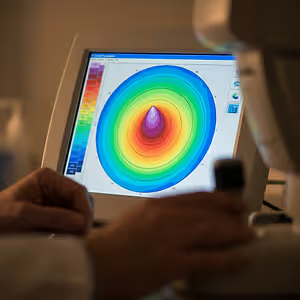
Corneal evaluation and topographic mapping
The fitting begins with corneal topography, a precise map of the curvature and irregularity across your entire corneal surface. Dr. Malani uses that map to select diagnostic scleral lenses that match your eye's profile. Each diagnostic lens is placed on the eye and evaluated under the slit lamp to confirm two things: the lens vaults the cornea without touching it, and the vision through the lens meets the standard you came in for. Parameters are refined until both conditions are met.
Custom lens order and handling training
Once the diagnostic fit is confirmed, Dr. Malani submits a custom lens order based on the final parameters. Lenses typically arrive within two weeks. At the dispense visit, you learn insertion, removal, and daily care with the specific saline and cleaning solutions recommended for your lens. Most patients are comfortable with the handling routine within the first two visits. Plan on two to four total visits over four to eight weeks to complete the fitting and fine-tune the prescription.
Living comfortably with scleral lenses
Most patients wearing properly fitted scleral lenses notice no discomfort through a full day of work, screens, and driving. The saline reservoir refreshes the ocular surface continuously, which is why patients with severe dry eye often achieve the most dramatic comfort improvement with this lens type.
Care is straightforward: fill the bowl of the lens with fresh preservative-free saline before each insertion, clean the lens with a daily cleaner at removal, and store it overnight in the recommended solution. Follow-up visits in the first year confirm the fit is still correct as the eye adapts. If a lens ever feels different, the fit is adjusted.
Related specialty care


Common scleral lens questions from Frisco patients
No. Because the lens rests on the white of the eye rather than on the cornea, most patients find sclerals more comfortable than soft lenses. The saline reservoir keeps the eye hydrated all day. Learning insertion and removal takes a few visits, but day-long wear becomes routine quickly for most patients.
Scleral lens fittings are priced separately from a standard contact lens fitting because the clinical work is more detailed. Many medical insurance plans cover scleral lenses when a corneal diagnosis such as keratoconus or post-LASIK ectasia is documented. Our team provides a written cost estimate and runs your benefits before the fitting begins so there are no surprises.
Plan on two to four visits over four to eight weeks. The first visit maps the cornea and evaluates diagnostic lenses. Custom lenses are ordered and arrive in approximately two weeks. Follow-up visits confirm the fit, make any needed adjustments, and complete handling training. Once the prescription is finalized, annual follow-up is all that is needed.
Most scleral lenses last two to three years with proper daily care. The lens material is rigid and durable, but coatings wear over time and prescriptions change. A yearly check confirms the fit still clears the cornea and that vision remains sharp. Dr. Malani recommends lens replacement when the clinical data indicates it is time.
No. Scleral lenses are removed before sleeping and showering. Water contact raises the risk of infection with any contact lens, and scleral lenses are not designed for overnight wear. Most patients establish a quick, comfortable insertion and removal routine within a couple of weeks.
All-day clear vision is possible, even for corneas standard lenses cannot fit.
Book a scleral lens fitting at Lotus Eyecare in Frisco and find out what your eyes can actually achieve.